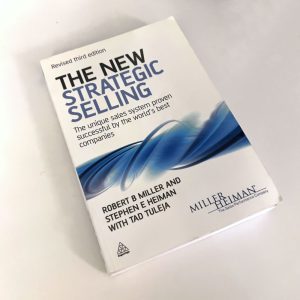
When taking a book to the local share station I saw there was this sales books by Robert Miller et al in English no less, odd as I was in Madrid. I like sales knowledge as it’s critical for business and relationships plus I hadn’t read anything related for a while so I included it in my reading list. This article is me sharing three take away items from The New Strategic Selling so that may enjoy an improved experience in your sales processes and customer relationships.
The book is very strong on highlighting that sales processes are often complicated in nature, this nature not being typically understood (often under looked) and aims to make overcoming this nature easier. So easy in fact that it should be a system, and one that can be learnt and optimised for personal and organisational success. It’s written across six sections comprising of 260 pages which highlight the six key elements of: buying influences, red flags & leverage from strength, the four response modes, win-results, ideal customer and the sales funnel. These are woven into the text yet remain key touch points for the authors who deem each of them critical to effective sales processes. However here are the three learning items I want to share with you:
Focus on success, not on avoiding failure
The authors make the salient yet important differentiation of focusing on success instead of focusing on avoiding failure as you’re almost certain to invite it if you do. Choosing to focus on success only helps the sales process by not entertaining all the things that can go wrong. However it’s important to stress that this doesn’t mean avoiding red flags or customer concerns and negative feedback; instead it’s about the mindset of being aligned to the customers desire to positively solve a problem using your product or service. And in a competitive commercial landscape this mindset can make all the difference.
Understand the different buying influences
A key part of the book is focusing on the customer and a key section was dedicated to relaying the four buying influences. This section is important as all too often sales professionals rely on their key contact during the sales process only to be let down as another influence to the outcome wasn’t recognised or taken care of by the sales process effectively. The first of these influences is the economic buyer which is concerned by the financial aspects of the sale and they weld significant power; as they can’t approve the deal but they do have the power to veto the sale deal. So they have to be identified and their economic concerns satisfied. Second is the user influence who is most likely to the person or people most affected by how the sale will change their operations. Consequently they need understand the impact of your offer and how it will improve their personal success within the organisation after its implementation. Next is the technical influence who will be screening potential suppliers and will have a criteria of what the sale will have to satisfy in order to proceed. In large organisations where needs and thus the sale process is often complex there are usually a range of technical influence in the process and perhaps at different stage – all that need to be addressed. Lastly there is the coach influence who is a unique person within the sales process who can make or break the whole thing. They are a champion of the outcome that the sale will bring and can be in your organisation or that of the customer company. In any case they can help you to identify and address each of the influences key concerns, giving you the support and the strategy to deliver a slam dunk of a sale.
Win-Win results
Throughout the book the authors were stressing the relationship of sales with the customer and that this should follow the stages of: satisfied customer, long-term relationship, repeat business and good referrals. As all to often the sales-customer relationship is imbalanced or the customer is seen as an enemy to be conquered but this should be far from the case. The sales process and enterprise at its core should be win-win for all involved and not a one and done either, instead a long-term relationship that both benefit from as a result. And is probably a reason why the authors wrote the book and stress it repeatedly: to help clean the tarnished image of the sales industry.
I really enjoyed this serendipitous find of a book as I read it at a time where I needed a refresher to my own sales knowledge and it consolidate my previous thinking while advancing the detail of my approach. It did this by widening my scope of who my proposals have to satisfy and how, while sharing granular details via its many case studies. If you see this or other titles from the authors I suggest you give them time to read and learn from these veterans of the sales process.